
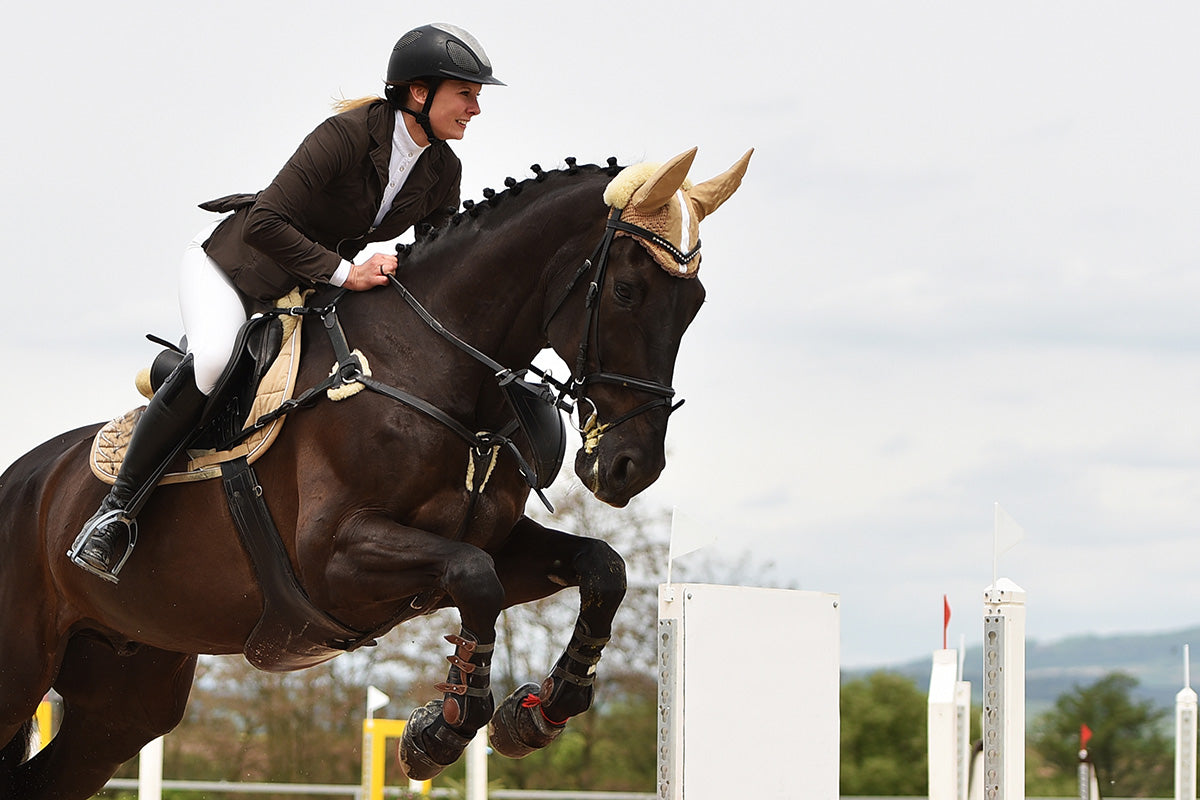
“Ideally, horse and rider move together in harmony, aligned in their center of balance. Two athletes, supporting each other and bringing out the best in each other’s movement. This noble goal can only be achieved if the link between both bodies — the interface that connects biped with quadruped in ever-changing locomotion — is near flawlessly fit. This interface is the saddle.”
— Stefanie Reinhold, Certified Passier® Saddle Fitter
Why Saddle Fit Knowledge Belongs to You
Whether you ride dressage, show-jumping, cross-country, or trail, the saddle is your most consequential piece of equipment. It is the only point of connection between two athletes with entirely different anatomies, moving together through constantly shifting balance. Knowing how to evaluate saddle fit — even at a basic level — is one of the most important skills a horse owner can develop. When that connection is right, both horse and rider can perform to their potential. When it is wrong, everything suffers — comfort, movement, partnership, and health.
Too many horses suffer silently from poor saddle fit. Too many riders experience frustration, unexplained resistance, and declining performance — without ever suspecting the saddle as the cause. The signs of poor saddle fit are often subtle at first: a horse that is reluctant to go forward, a back that flinches at grooming, a rider who cannot find balance no matter how hard she tries. And too many well-intentioned purchases are steered by salespeople whose primary interest is closing a sale rather than solving a problem.
This series was written to change that.
The Questions Most Riders Ask First
Do I really need to understand saddle fit myself? Can’t I just leave it to the experts?
No — and yes. You absolutely still need a qualified, independent saddle fitter. But leaving the entire subject to someone else puts you at a disadvantage. A horse owner who understands the basics of saddle fit evaluation can ask better questions, recognize red flags, and make more informed decisions. That knowledge is not a replacement for expertise; it is a safeguard.
Do I need to know everything?
Not at all. You need to know enough to recognize when something is wrong — how to tell if your saddle fits or doesn’t — to describe what you are seeing in your horse’s movement and behavior, and to have a productive conversation with your fitter. That is a much smaller body of knowledge than you might expect.
Can an amateur really learn this?
Yes. The fundamentals of saddle fit are grounded in equine anatomy, centuries of saddlery craft, and observable biomechanics. They are learnable. Every chapter in this series is designed to give you practical exercises to apply directly on your own horse.
Will I still need a saddle fitter after reading this?
Always. This series will make you a more informed client, not a self-sufficient one. The goal is not to replace expert judgment — it is to make sure you are never left entirely dependent on someone else’s.
Before You Begin: A Genuine Caution
There is something important to know before you continue.
The knowledge in this series, once absorbed, does not switch off. You will begin to see saddle fit — or the lack of it — everywhere. At the barn. At shows. In photographs and videos. In the work of other professionals, including some who are well-credentialed.
This is not a comfortable thing. You may witness more examples of poor saddle fit than you expected. Some of what you see may be surprising or even distressing. We tell you this not to discourage you, but because informed riders deserve to know what they are signing up for.
If you are ready to see the world through that lens, read on.

What This Series Covers
This saddle fitting guide for horse owners covers one practical aspect of saddle fit evaluation per chapter. New chapters are added regularly. Below is the full planned outline — published chapters will link directly from here.
Published:
• How to Evaluate Saddle Fit: A Guide for Horse Owners — This article (Hub)
Coming in this series:
1. The Anatomy of Saddle Fit: What the Horse’s Back Tells You
2. 5 Key Parameters of Saddle Fit: A Checklist
3. Tree Width and Gullet Channel: Is Wider Always Better?
4. Panel Contact: How to Read Pressure and Bridging
5. The Rider’s Position: How Saddle Fit Affects Your Seat
6. Signs of Poor Saddle Fit: Behavior, Performance, Lameness
7. Choosing a Saddle Fitter: What to Look For, What to Avoid
8. The Saddle Fitting Appointment: What to Expect and What to Ask
9. When to Refit: Seasons, Training, and the Changing Horse
10. Notes about Flocking: To Foam or Not to Foam
Stay Connected
New chapters are published periodically. Sign up for the HorseHaus newsletter to receive notifications when new articles are added — along with practical saddle care tips, product guidance from our German equestrian suppliers, and occasional insights from Stefanie’s work as a certified Passier® fitter across the United States.
→ Subscribe to the HorseHaus newsletter
→ Book a free 15-minute Saddle Fit Discovery Call
→ Learn about our Virtual Saddle Fitting Service
About the Author

Stefanie Reinhold is the founder of HorseHaus and a certified Passier® saddle fitter, certified Herm Sprenger® bit fitter, Masterson Method® practitioner, and clinician. She is the co-author and translator of multiple equestrian books. She conducts in-person and virtual saddle fittings across the United States.
HorseHaus — For horses. From horse people.
horsehaus.com