
Product Guides

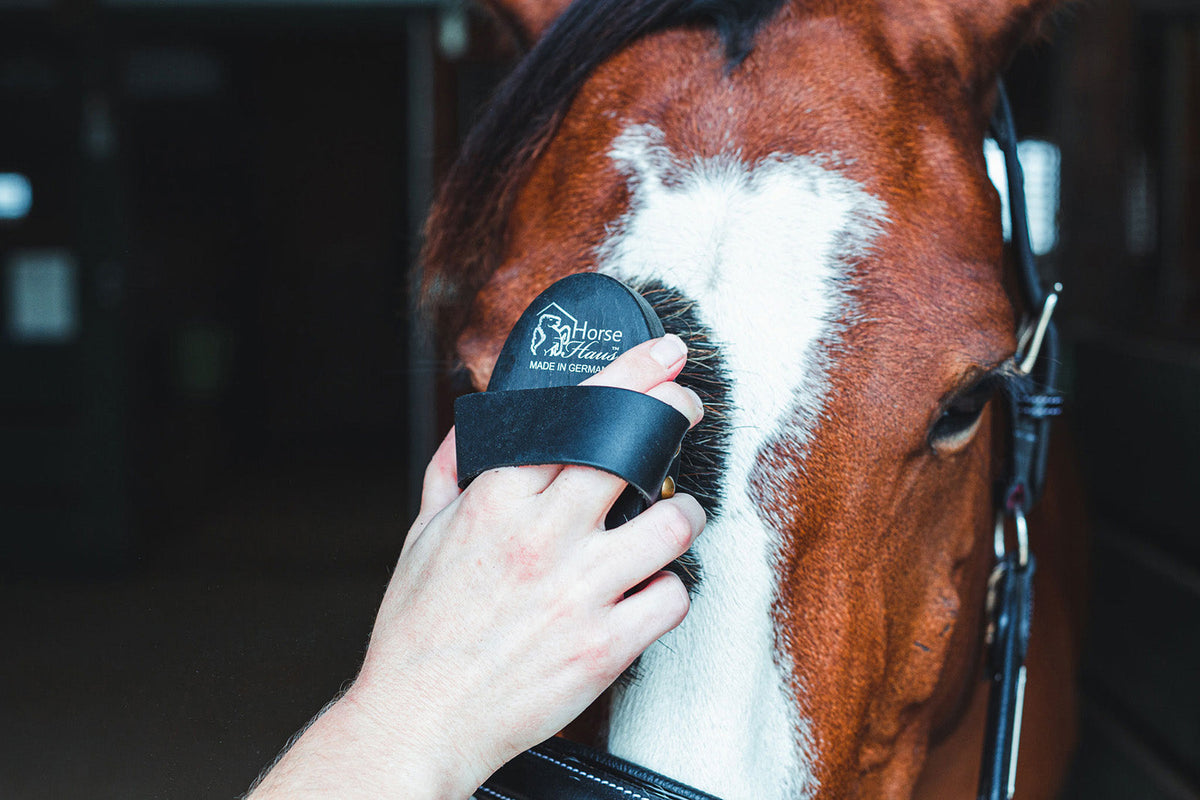
Soft HorseHaus brush used gently on a bay horse's face

Are Natural Horse Brushes Worth It? How We Choose Materials for Horse Care.

Natural bristles, wood, and wool hold a special place in our collection. Here is why we choose them, how different fibers do their work, and what research shows about grooming with your horse's comfort in mind.

The Sponge Brush by Haas - Why you will love it!

The Sponge Brush by Haas - Why you will love it!

Washing your horse is a key step in any thorough grooming routine. When sweat and grime build up, out come the hose and horse shampoo—for good reason. Ideally, shampoo no...

a flexible massage curry for horses by haas

The Curry Comb – The Unsung Hero of a Shiny Coat

Grooming your horse to a radiant shine is easier than most owners think. Many grooming totes are stuffed with a dizzying array of brushes—yet the most essential tool is often...

Good Brushes: More Everything for Your Buck

Good Brushes: More Everything for Your Buck

Why you should use the best grooming brushes you can find ...and where to find them. What not to use: These brushes are scratchy and dull the coat! If you...

Save & ENJOY with complete horse grooming sets

Save & ENJOY with complete horse grooming sets

A complete horse grooming set can be the answer to the question: "What horse brushes do I need?" See the different options and find the set that is right for you. 

horsehaus body brush gold after cleaning

Master Guide: How to Clean and Maintain Your Horse Brushes

Proper care for fine natural-fiber horse brushes is an art. From the 'Potato Starch' weekly refresh to the deep-cleaning shampoo method, learn the professional techniques for maintaining your HorseHaus brushes. Includes a DIY essential oil disinfecting spray recipe and a printable care guide.

Product Guides FAQ

Which curry comb should I use?

A rubber curry is recommended for the whole-body massage, such as the Haas New Generation, or the Epona curry for sensitive horses. Skip brittle, prickly, cheap plastic curries. They can cause micro-cuts and scratch the skin. Use a metal curry with rounded edges only on dry, caked-on mud on muscled areas, and to clean your brushes during grooming.

What grooming tools does every rider really need?

Five essentials:

  1. A gentle massage curry.
  2. A natural or non-static flick (dandy) brush.
  3. A natural-bristle body brush.
  4. A soft finishing tool: goat hair brush, lambskin mitt or wool rag.
  5. A sturdy mane and tail brush that doesn't pull out hair.

Are natural horse brushes worth it?

They are when two things come together: a fiber that suits the job, and a brush built to last. As a guide:

  • Plant fiber is firm, for dried mud and heavier dirt.
  • Boar bristle is springy, for lifting dust.
  • Horsehair is for body and finishing work.
  • Goat hair is very soft, for the face and final polish.

Construction matters as much as material, and good synthetic tools have their place too.

Which brushes work best for sensitive horses?

A soft, flexible brush used with a light hand is a good place to start. After that, your horse is the best guide: watch how he responds to the bristles. For complete sets, see the "Masar" and "Eclipse" grooming sets.

How do I clean my horse brushes?

  • While grooming: flick the brush against a rubber curry every 2–3 strokes.
  • Weekly: work potato starch (never corn starch) into horsehair and goat hair brushes, let it sit for about 30 minutes, then brush it out against a firm curry.
  • Every 3–6 months: soak in shallow water with equine shampoo. The water must not touch the wood. Rinse with the brush held on its side, and dry it bristles-down and then on its side.

Never let a wet brush dry bristles-up, and allow up to 48 hours for it to dry completely.

Which grooming set is right for my horse?

HorseHaus sets are put together for common situations: sensitive horses, dark horses, outdoor horses ("Wildheart"), and white or grey horses. The differences between sets are minor, and any set can be used on a horse of any color.

How do I care for leather tack?

  1. Remove loose dirt.
  2. Clean with a leather cleaner on a lightly damp sponge.
  3. Wipe off the product and let the leather air-dry, away from sun and heat.
  4. Condition the dry leather: leather oil about twice a year, a conditioning balm about once a month.

Never oil dirty leather, and don't over-oil.